
Your car’s suspension system is one of the most important — yet often overlooked — parts of your vehicle. It’s the reason your rides are (or should be!) smooth, stable, and safe, even on bumpy or uneven roads.
In this guide, we’ll break down what a car suspension is, how it works, and why it matters to you as a driver.
🚗 What Is Car Suspension?
Car suspension is a system of springs, shock absorbers (or struts), and linkages that connects your vehicle to its wheels. It serves two main purposes:
1️⃣ It supports the weight of the vehicle while absorbing and dampening shocks from road irregularities.
2️⃣ It helps keep the tires firmly in contact with the road for better control, handling, and braking.
Without suspension, every bump or pothole would directly jolt the chassis, making driving uncomfortable and potentially dangerous.
⚙ Main Parts of a Suspension System
A typical car suspension includes:
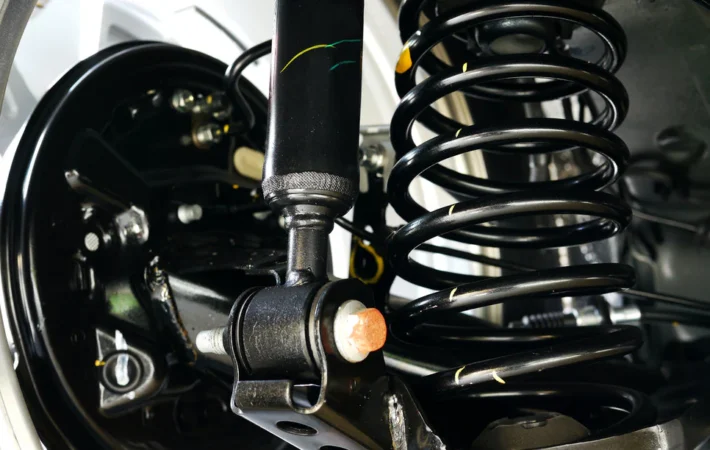
Springs (coil or leaf springs) – support the vehicle’s weight and absorb large bumps.
Shock absorbers or struts – control and dampen the movement of springs to prevent excessive bouncing.
Control arms and linkages – connect suspension components to the vehicle frame and allow up-and-down wheel motion.
Ball joints and bushings – allow for flexible movement and reduce friction between parts.
Anti-roll (stabilizer) bars – reduce body roll during cornering.
Each of these parts works together to deliver a balance of comfort, safety, and performance.
🌟 Why Is Suspension Important?
👉 Ride Comfort
Your suspension absorbs shocks from bumps, potholes, and rough surfaces, so you (and your passengers) feel fewer jolts and vibrations.
👉 Handling and Control
By keeping your tires in proper contact with the road, suspension ensures stable steering, braking, and cornering — critical for your safety.
👉 Protects Your Vehicle
It reduces stress on the car’s frame and body by cushioning impacts from the road.
👉 Even Tire Wear
A healthy suspension helps distribute weight evenly across all tires, extending tire life.
🛠 Types of Car Suspension
There are several designs, but two common types include:
✅ Independent Suspension — Each wheel moves independently, offering better ride quality and handling (common in modern passenger cars).
✅ Solid Axle / Dependent Suspension — Wheels on an axle move together; this setup is often found in trucks and some SUVs because of its strength.
⚠ When to Check Your Suspension?
Watch for signs like:
A bumpy, uncomfortable ride.
Car pulling to one side.
Uneven or rapid tire wear.
Clunking noises over bumps.
Excessive body roll when turning.
If you notice these, it’s time to get your suspension checked by a professional.
Leave a comment
Your email address will not be published. Required fields are marked *